

Designed To Look Like You
The psychology behind anthropomorphism

Have you ever shouted at a laptop that froze right before an important deadline? You may have (jokingly) accused it of deliberately choosing that exact moment to crash. Similarly, people may plead with a car that won’t start, or thank it after going on a long drive. We know that none of these objects have wants or intentions. And yet in the moment, we treat them as if they do.
In human-computer interaction, anthropomorphism is our tendency to attribute human-like characteristics to a technology. Even purely metaphorical forms of anthropomorphism, where we rationally know that the object is not human, are known to change our attitudes towards it. Without realising it, we start behaving in line with the metaphor. Think about what happens when we name a storm. The storm now has a gender, and a personality that may be more or less aggressive. We describe the way it moves and how it destroys without mercy, as if it is doing so intentionally. The same thing occurs when we “declare war” on concepts like inflation. By speaking about inflation as if it were a person, we intensify our attitudes and emotions towards it. None of this is a conscious decision: our tendency to humanise is an automatic reflex that happens without us noticing.
As artificial intelligence becomes a standard feature of our working lives, it is worth understanding why we have this tendency, and how that tendency is being influenced.
Psychologists spent years studying why and when people anthropomorphise. They found that it comes down to three psychological factors working in combination.
The first factor is what we call elicited agent knowledge: the mental shortcut we use when we encounter something unfamiliar. Because humans are the agent we know best, we use ourselves as a template. When we can’t quite predict how something will behave, we ask: what would a person do here? This is particularly relevant in AI contexts, because many people don’t have a clear picture of how the technology actually works. In absence of that understanding, the brain reaches for the most familiar framework it has: our own human minds.
Another factor is effectance motivation, which simply means our need to reduce uncertainty. Unpredictable things make us anxious, and one of the fastest ways to make something feel predictable is to give it a personality. If a digital assistant has a personality, we start to build expectations around it, the same way we build expectations around people. Suddenly it feels less like using a system and more like having a conversation.
Our final factor is called sociality motivation: the deep human need for connection. Research shows that when people feel isolated or disconnected, they become more likely to anthropomorphise the things around them.
Several design choices tend to trigger this response, for example in AI-enabled technologies. We are more likely to humanise a machine when it looks like a person: when it has a face, shows expressions, or moves with gestures. Psychological features are just as important: whether the system appears to have a personality and show emotions. With voice assistants and chatbots, we respond to a name, a personality, and replies that feel context-aware. Chatbots refer to themselves as “I”, they apologise, express concern, and speak in a warm voice. Taken together, these choices form a design strategy used to activate the same response as when interacting with other people.
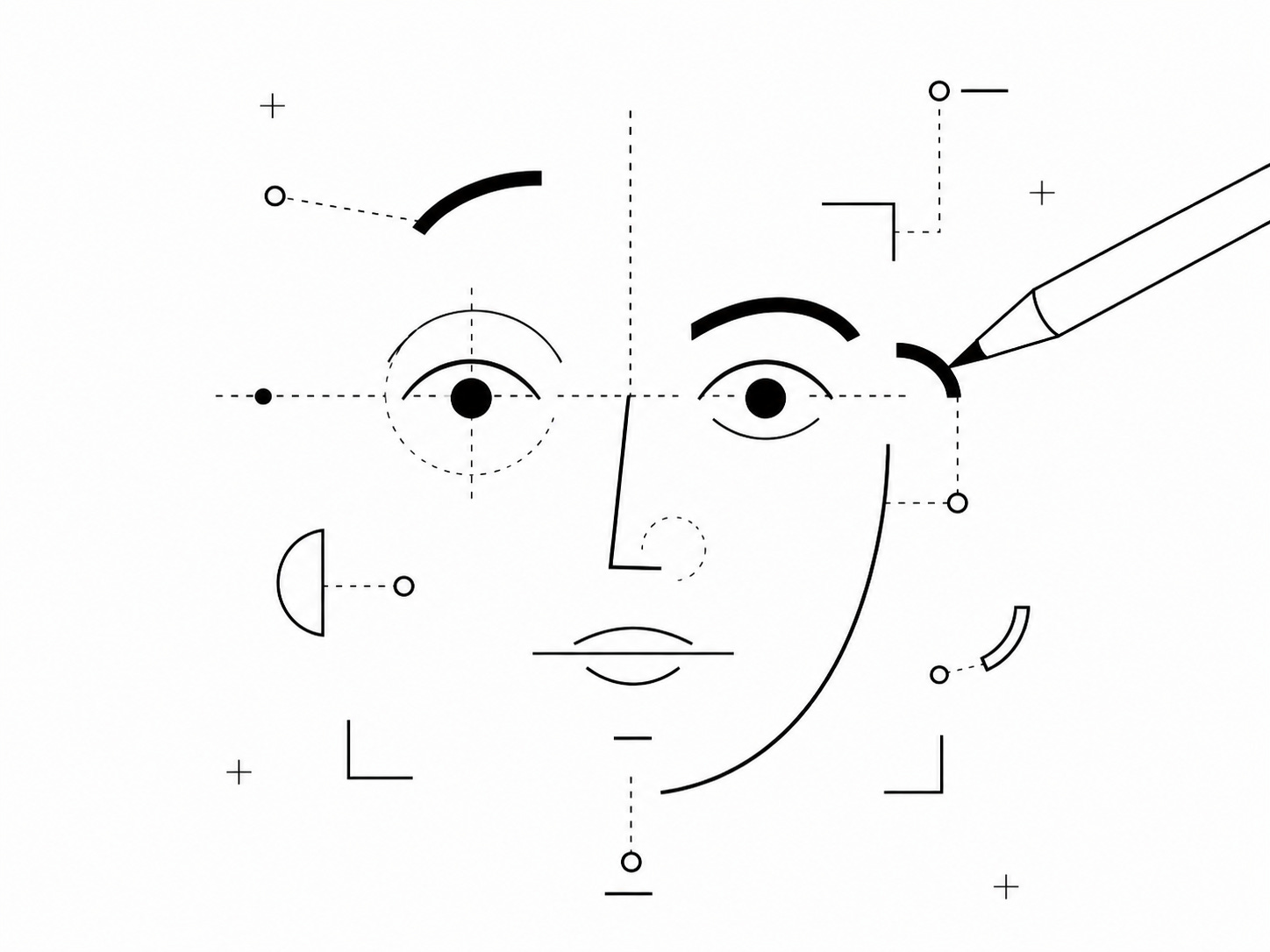
None of this is lost on the companies building these systems. We see it in the banking app whose assistant has a first name and a warm, encouraging tone, or the customer service chat that greets us by name and says it is sorry to hear we are having trouble. These are deliberate choices, made with a clear understanding of the psychology involved. The aim is to establish a social and emotional relationship with the user, make the AI easier to engage with and more likely to be trusted and adopted.
It is important to remember that the sensation of being understood has been produced this way. The products are anthropomorphised by developers, and personified by users. AI chatbots and LLMs are designed to mimic human behaviour and conversation patterns, and they have become incredibly good at it. But the technology itself is not alive, self-aware, or conscious, and it does not possess the human qualities it appears to have. What we are responding to is design.
The factors that trigger anthropomorphism are becoming more relevant in the modern world, and the conditions may be stronger now than they have ever been. Loneliness and social disconnection are concerning trends in many societies. At the same time, everyday human contact points are being replaced by automated interactions. AI tools with human faces are increasingly taking over customer-facing roles in areas like service and healthcare. This does not necessarily make those interactions worse. But it does mean the conditions that make us more likely to anthropomorphise are arriving at the same moment as the technologies we are most likely to anthropomorphise.
Good and intuitive design is important, and there is real value in a tool that feels easy and more engaging to use. But the same human-like features that make a system pleasant and more engaging to talk to, also make it more addictive and their recommendations more persuasive.
We could ask ourselves whether we really need a human name and voice on every product, and whose purpose it is serving. Our tendency to humanise is not easy to switch off. But what we can do is keep the two things apart in our minds: how a tool makes us feel, and how reliable it actually is.
We will be exploring different angles of this concept more deeply in upcoming articles.
Thank you for reading AI Ethics Made Practical! Subscribe for fee to receive new posts and support my work.
My philosophy is that knowledge is to be shared. All articles are free to read and will stay that way.
But if you appreciate what I’m doing and would like to support my work, please consider buying me a coffee or upgrading your subscription. Becoming a supporter helps keep this publication independent and ad-free.
Help to spread the message and share this article.
References
Abercrombie, G., Curry, A., Dinkar, T., Rieser, V., & Talat, Z. (2023). Mirages. On Anthropomorphism in Dialogue Systems. Proceedings of the 2023 Conference on Empirical Methods in Natural Language Processing, 4776–4790. https://doi.org/10.18653/v1/2023.emnlp-main.290
Epley, N., Waytz, A., & Cacioppo, J. T. (2007). On seeing human: A three-factor theory of anthropomorphism. Psychological Review, 114(4), 864–886. https://doi.org/10.1037/0033-295X.114.4.864
Li, M., & Suh, A. (2022). Anthropomorphism in AI-enabled technology: A literature review. Electronic Markets, 32(4), 2245–2275. https://doi.org/10.1007/s12525-022-00591-7
Nass, C., & Moon, Y. (2000). Machines and Mindlessness: Social Responses to Computers. Journal of Social Issues, 56(1), 81–103. https://doi.org/10.1111/0022-4537.00153
Peter, S., Riemer, K., & West, J. D. (2025). The benefits and dangers of anthropomorphic conversational agents. Proceedings of the National Academy of Sciences, 122(22), e2415898122. https://doi.org/10.1073/pnas.2415898122
This is a very confronting piece. Thank you for holding up a mirror to us all.
What struck me most was what you said about social isolation. If so many of our interactions our being replaced by AI, how does this affect this children, sick people and the elderly? I worry about the most vulnerable among us.
Lisa, this is a wonderfully clear walk-through of the three factors. A commenter below asked what this means for children; that question is where I live professionally. Reading it from the child-development side, one line stayed with me: “we rationally know that the object is not human.” That rational anchor is something adults bring to the interaction. Young children are still building it; working out which things have minds and feelings is part of their development, and it takes years. So when a product is deliberately designed to activate our social responses, I keep wondering what that same design means for someone whose distinction between “feels human” and “is human” is still under construction. Your closing advice, keeping how a tool makes us feel separate from how reliable it is, may be something adults need to hold on children’s behalf for quite a while.
I am looking forward to the rest of the series.